
How Blush Mark Jumpsuits Actually Stay Wrinkle-Free All Day
You pull a jumpsuit from your suitcase, and it looks exactly as smooth as when you packed it three days ago. No steamer, no wrinkle-release spray, no panic ironing in a hotel bathroom.
That’s the promise behind every piece we design at Blush Mark—clothes that hold their shape and finish through real wear, not just the first hour. Our jumpsuits use a specific mix of fiber blends and garment construction to resist creasing, whether you’re sitting through a cross-country flight or rushing between back-to-back meetings. This guide walks through the actual fabric science and design choices that make a jumpsuit wrinkle free all day, so you know what to look for when shopping and how to care for the pieces you already own.

Fabric Blend Ratios That Resist Creasing
Wrinkle resistance starts with fiber choice. Pure cotton breathes beautifully but creases the moment you sit down; pure polyester resists wrinkles but can feel stiff or trap heat.
We build most of our Blush Mark Jumpsuits around a 65/32/3 blend: rayon for drape and movement, polyester for wrinkle recovery, and spandex for stretch that snaps the fabric back into place after you bend or sit. Rayon gives the garment a natural hand feel—closer to cotton than plastic—while polyester forms a support scaffold that prevents the fabric from holding a crease line.
The spandex percentage matters more than most shoppers realize. Even three percent creates enough elasticity to smooth out stress points at the waist and knees, areas where static fabrics crumple first. If you’ve ever compared a rigid linen jumpsuit to a stretch-rayon version after an hour of wear, you’ve seen this difference firsthand.
Construction Details That Prevent Stress Wrinkles
Fabric alone won’t keep a jumpsuit smooth if the pattern and seam placement fight against your body’s natural movement. We cut our jumpsuits with a slightly wider leg opening and a higher rise than fast-fashion patterns, which reduces tension across the hips and thighs when you sit.
Seam lines also matter. A center-back seam that pulls tight when you lean forward creates a permanent crease over time; our patterns use side seams and a shaped waistband that distributes tension evenly. The result is a garment that moves with you instead of folding against you.
We also add internal stay stitching at stress points—under the arms, along the crotch seam—so the fabric doesn’t stretch unevenly and create puckering. These invisible reinforcements cost more in production time but mean the jumpsuit looks the same at 8 PM as it did at 8 AM.
Why Rayon-Poly Blends Outperform Pure Synthetics
All-polyester jumpsuits promise zero wrinkles, and they deliver—but they also trap body heat, pill after a few washes, and feel plasticky against skin. Rayon softens that trade-off.
Rayon is a semi-synthetic fiber made from wood pulp, so it breathes like a natural fabric but accepts dye and chemical finishes like a synthetic one. When you blend it with polyester, the polyester handles wrinkle resistance while the rayon handles comfort and drape. The two fibers also shrink at different rates in the wash, which creates a subtle texture that hides minor creases better than a flat, shiny synthetic weave.
For readers comparing silhouettes, our Blush Mark Jumpsuits vs Blush Mark Dresses: Which Silhouette Works Best for Your Plans? guide explains how the same fabric technology carries across both categories—so you get the same wrinkle-free performance whether you choose a one-piece or a separate top and skirt.

Pre-Treatment and Garment Finishing
Before a jumpsuit ever reaches our warehouse, it goes through a wrinkle-resistant chemical finish during the dyeing process. This treatment coats each fiber with a resin that makes the fabric stiffer—just slightly—so it doesn’t collapse into folds as easily.
We also pre-wash every piece to remove excess dye and shrinkage, so the jumpsuit you receive has already gone through the harshest part of its wash cycle. That means fewer surprises after your first laundry day and a garment that holds its shape more predictably over time.
Steam Pressing vs. Chemical Finishing
Some brands skip the chemical step and rely on heavy steam pressing to make garments look smooth in photos. That crispness disappears the first time you wear the piece. Our finishing process builds wrinkle resistance into the fiber itself, not just the surface.
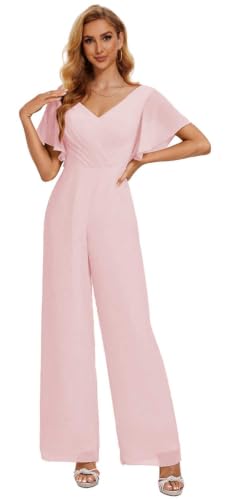
Caring for Wrinkle-Free Jumpsuits Long-Term
Even the best fabric blend needs proper care to maintain its wrinkle resistance. Wash jumpsuits inside-out on a cool cycle—hot water breaks down the resin finish over time and causes the fabric to lose its recovery snap.
Skip fabric softener entirely. Softener coats fibers with a waxy layer that actually traps wrinkles instead of releasing them. If you want extra softness, add a half-cup of white vinegar to the rinse cycle; it conditions the fabric without leaving residue.
Hang-dry whenever possible, or tumble on low heat for no more than ten minutes to reduce drying time. Over-drying shrinks the spandex fibers and makes the garment stiffer, which creates new crease lines where the fabric used to stretch smoothly. If you pull the jumpsuit from the dryer while it’s still slightly damp and hang it to finish air-drying, it will settle into its original shape with zero ironing.
Why Wrinkle-Free Performance Matters in Real Wear
A jumpsuit that stays smooth through a full day isn’t just about vanity—it’s about eliminating one more decision from your morning routine and one more thing to worry about when you’re already running late.
The fabric blends, construction details, and finishing treatments we’ve covered here are the reasons our jumpsuits hold up to real use, not just photo shoots. When you invest in a piece that’s engineered to resist wrinkles, you’re buying back the time you’d otherwise spend steaming, ironing, or second-guessing your outfit halfway through the day. That’s the actual value of wrinkle-free design, and it’s why we build every piece around that promise.
Common Questions About Keeping Jumpsuits Smooth
Yes, if you roll it instead of folding it. Lay the jumpsuit flat, fold the arms across the chest, then roll from the hem up toward the neckline. Rolling distributes tension evenly and avoids the sharp crease lines that come from traditional folding.
Place the rolled jumpsuit in the center of your suitcase, surrounded by softer items like underwear or t-shirts, so it doesn’t get crushed against hard edges. When you arrive, hang it in the bathroom while you shower—the steam will release any minor wrinkles that formed during transit.
Most do, but a few styles use pure linen or cotton for a specific aesthetic. Those pieces are labeled clearly in the product description, and we always recommend steaming them before wear.
Our core collection—anything labeled as a rayon-poly blend—uses the wrinkle-resistant construction described in this guide. If wrinkle-free performance is your top priority, filter by fabric type when browsing.
It will diminish slightly over time, but proper care extends its life significantly. Avoid hot water, skip the fabric softener, and don’t over-dry.
After about fifty washes, you may notice the fabric holds a light crease at the knees or elbows. A quick steam or a few minutes in the dryer with a damp towel will refresh the finish. The jumpsuit won’t look brand-new forever, but it will still outperform a cotton or linen piece by a wide margin.
You can, but use a low heat setting and press on the reverse side. High heat can melt the polyester fibers or break down the wrinkle-resistant finish.
Most of the time, a handheld steamer is a safer choice. It refreshes the fabric without direct contact and won’t create shiny press marks on dark colors.
The fabric technology is identical—both use rayon-poly blends with stretch and a chemical finish. The difference is coverage.
Jumpsuits have a larger unbroken surface area, so wrinkles are more visible when they do form. That’s why we add extra internal stay stitching and use wider leg cuts to reduce tension. If you prefer separates, the same fabric principles apply across our pants and dresses.
Hang it in a steamy bathroom for ten minutes, or toss it in the dryer on low heat with a damp washcloth for five minutes. Shipping compression is temporary—the fabric will release those wrinkles as soon as you give it a little heat and moisture.
If wrinkles persist after steaming, the garment may have been folded in the warehouse instead of rolled. Contact our team; we’ll walk you through a fix or arrange a replacement if the fabric didn’t hold up to our standard.